Travel Food Services - India's Airport F&B Leader
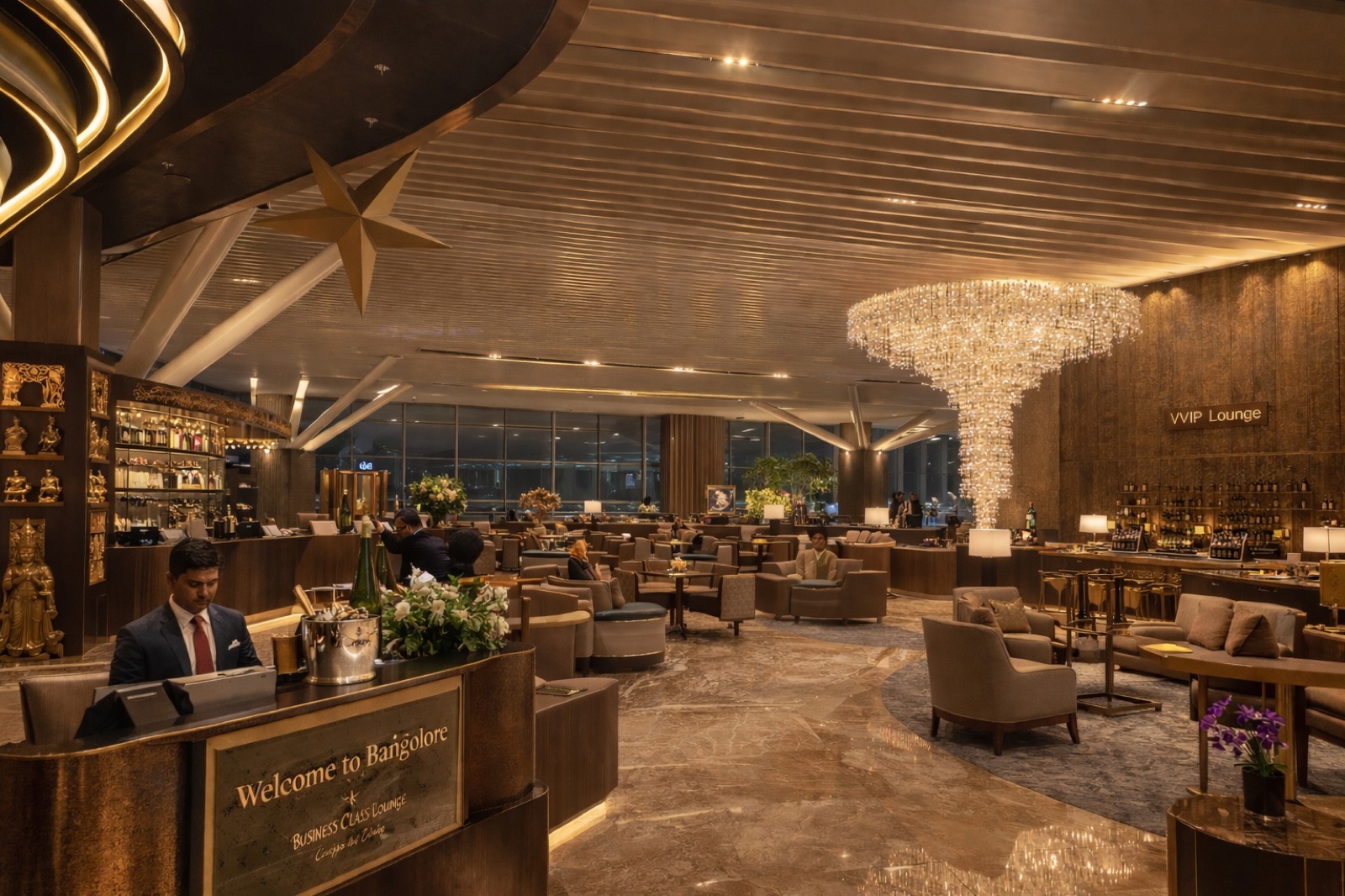
Introduction: India's Aviation Growth Story
India's aviation sector is experiencing structural growth, with air travel per capita at just 0.29 trips compared to China's 1.08 and the USA's 5.59. This gap represents significant runway for expansion as economic fundamentals improve. Passenger traffic is expected to grow between 7% to 8% annually over the next decade.
Key Growth Drivers:
- Infrastructure expansion: Total 138 operational airports (Aug 2025) projected to reach 350 by 2047; ~2,400 aircraft on order (3x current fleet)
- Economic tailwinds: GDP per capita crossing $2,800 (FY25), rising disposable incomes, and growing middle class
- Democratization of air travel: Low-Cost Carriers now represent 75% of market share (vs 66% in FY16), making air travel accessible to millions of first-time flyers
- Structural shift: As incomes rise, the opportunity cost of 16-36 hour train journeys becomes irrational—air travel shifts from luxury to necessity for business and family occasions
Projected Growth: Domestic aviation at 9.3% CAGR (CY24-29), significantly outpacing GDP growth.
Why This Benefits Airport F&B Operators
More air travelers directly translate to captive consumption opportunities:
- Extended dwell times: Passengers arrive 2-3 hours before flights for check-in, security, and boarding—creating F&B consumption windows
- Captive post-security audience: Limited alternatives once passengers clear security checkpoints
- Premiumization: Travelers choosing air over rail demonstrate willingness to pay for time/comfort—higher propensity for airport F&B spending
- Lounge economics: 70-80% of lounge revenue is B2B-funded by banks (ICICI, HDFC, Visa, Mastercard) offering co-branded credit card benefits—creating negative customer acquisition cost for operators
Travel Food Services: The "Toll-Bridge" on India's Aviation Highway
Travel Food Services (TFS) is India's leading operator of F&B outlets and premium lounges in the travel infrastructure sector. It acts as a "one-stop-shop" for airport operators, managing the entire food and hospitality ecosystem within terminals.
Scale & Reach:
- 580 Travel QSR outlets and 39 lounges across 21 airports in India, Malaysia, and Hong Kong 466 across 16 airports, 29 outlets in 2 airports in Malaysia, 23 outlets in 9 highway sites in India. 295 direct, 223 outlets via join ventures or Associates 29 lounges in 11 airports of india, 8 lounges in 3 airports of Malaysia and 2 in Hong Kong airport.
- Presence at 14 of top 15 Indian airports (Pune is missing) In Q1 Fy 27 concall they mentioned that pune bidding will come up in next 2 years and they are planning to bid for it
- 153+ brand portfolio spanning in-house, regional, and international concepts 98 brand partners.
- Select highway sites in exploratory phase
Market Dominance:
- ~30% market share in Indian airport QSR sector
- ~45% market share in Indian lounge sector
- Strategic JV partnerships with Adani Airports (Semolina Kitchens) and GMR (Hyderabad Lounge)
Business Model: TFS operates on a concession-based model, functioning as a master concessionaire at most airports. The company invests in fit-outs and equipment while airports provide infrastructure. This asset-light approach delivers:
- 39-40% ROE and 41-42% ROCE
- 30%+ PAT margins and 38-40% EBITDA margins
- Zero debt with ₹7.5bn cash (as of Sep 2025)
Revenue Concentration:
- ~96% of revenue from airport operations (Q3 FY26: ₹4,562m revenue, +18.3% YoY)
- Top 5 airports contribute 86-90% of total revenue
- Highway and international operations remain nascent (~4% combined)
This concentration creates both opportunity and risk: undiluted exposure to India's aviation structural growth (0.27 → 0.81+ trips per capita) but with 100% correlation to sector performance.
How TFS Captures the Aviation Growth Story
1. Volume Growth from Passenger Traffic
The Math:
- Every 1% increase in passenger traffic ≈ 1% revenue growth for TFS (all else equal)
- With 9.3% aviation CAGR projected, TFS has a built-in growth engine
- System-wide presence at 14 of top 15 Indian airports means TFS captures network-wide traffic growth
The "Like For Like Delta" – TFS's Secret Weapon:
Q2 FY26 demonstrated TFS's operational moat:
- Passenger traffic: -3.5% YoY (external shocks)
- LFL growth: +3.8% consolidated, +9.2% system-wide
- ~10% outperformance gap driven by:
- Penetration improvements: More travelers buying from TFS outlets (brand refresh, menu innovation)
- Premiumization: Celebrity chef concepts (Gordon Ramsay Street Burger, Wagamama) commanding higher ticket sizes
- Throughput optimization: 5-minute quick commerce menu reducing wait times, increasing conversions
This is the moat in action: TFS grows revenue faster than passenger traffic through operational excellence, brand depth, and pricing power. This single metric justifies paying a premium multiple.
2. Infrastructure Expansion = Automatic Growth
New Airport Contracts (Last 12 Months):
- Cochin International: 11 QSR outlets + 1 premium lounge; operations commenced in January 2026 and are currently ramping up.
- Noida International: QSR and lounge contracts; greenfield airport, with operations ramping alongside airport traffic.
- Navi Mumbai: QSR contracts awarded; new airport opportunity with significant Mumbai catchment.
- Delhi T2: 14 units operational under 3-year concession
The Concession Lock-In:
Airports prefer single "master concessionaire" managing entire F&B ecosystem:
- Strategic JVs with landlords create near-insurmountable barriers:
- Semolina Kitchens (25% TFS, 75% Adani Airports): Mumbai, Ahmedabad, Lucknow, Mangalore – 15+ year contracts
- GMR Hyderabad Lounge (30% TFS, 70% GMR): Hyderabad Airport
- 93.9% historical contract retention rate validates stickiness
- "Right to Win" for greenfield projects due to track record and JV partnerships
The Risk: Lose Delhi T3 renewal (FY26) = 15-20% revenue impact overnight. But JV structure with GMR/Adani makes displacement highly unlikely.
3. Premiumization of Travel Consumption
Behavioral Shift:
- Pre-pandemic: Airport F&B = expensive necessity
- Post-pandemic: Quality, experience, convenience valued; willingness to pay for premium
TFS's 135+ Brand Portfolio Strategy:
| Segment | Brands | Strategy |
|---|---|---|
| Budget | Cafeccino, Idli.com, Dilli Streat | High throughput, regional comfort food |
| Mid-Tier | A2B, Wow! Momo, Bikanerwala, 3rd Wave Coffee | Established regional brands, repeat customers |
| Premium | Gordon Ramsay, Wagamama, Irish House, Brioche Dorée | Celebrity chef concepts, higher margins |
Regional Customization:
- South Indian concepts in Chennai/Bangalore (A2B, Hatti Kaapi, Idli.com)
- North Indian in Delhi (Dilli Streat, Bikanerwala)
- International brands at metros (Wagamama Mumbai debut, Gordon Ramsay Delhi T1)
4. The Negative-CAC Lounge Goldmine
The Ultimate Business Model:
- 70-80% of lounge footfall funded by banks and card networks (ICICI, HDFC, Visa, Mastercard) who pay per-visit fees to TFS
- TFS earns revenue without customer acquisition cost
- EATS Platform moat: Proprietary lounge access management system with direct bank/card integration
- Creates switching costs for financial institutions
- Potential to license to third-party lounges (though management says "too preliminary to quantify" – don't pay for vapor)
Credit Card Penetration as Tailwind:
India's credit card market is growing rapidly—penetration rising from 5.5% (FY20) to 8.2% (FY25) with 12%+ projected by FY30. With 60+ million cards in circulation and banks competing on travel perks (HDFC Infinia, ICICI Sapphiro, Axis Magnus), complimentary lounge access has become a key differentiation tool.
This creates a behavioral tailwind for TFS:
- Flight preference: Free lounge access can tip the decision toward flying vs. alternatives
- Early arrival: Travelers with lounge access arrive 2-3 hours early to maximize the perk—extending dwell time and consumption windows
As banks continue competing on travel benefits, TFS's lounge business benefits from credit card industry growth without bearing customer acquisition costs.
Lounge Market Growth:
| Year | Global Lounge Market (USD Bn) | India Context |
|---|---|---|
| 2019 | 5.7 | Pre-pandemic baseline |
| 2023 | 6.7 | Recovery phase |
| 2029P | 11-12 | TFS holds 45% India market share |
| 2034P | 15-16 | 10% CAGR (2023-34) |
39+ lounges operational (India, Malaysia, Hong Kong) with expansion pipeline tied to new airport contracts.
5. Adjacent Growth Vectors: The Reality Check
Indian Expressway Travel QSR Market:
| Year | Market Size (INR Bn) | TFS Position |
|---|---|---|
| FY19 | 4 | Zero presence |
| FY24 | 15 | Exploratory stage |
| FY29P | 75-85 | "Pilot phase to prove model" |
| FY34P | 220-240 | 1,000 Wayside Amenities planned by NHAI |
The Honest Assessment:
- TFS has opened ZERO expressway outlets at scale
- Management explicitly cautious: "Won't compromise return metrics," "selective exploration"
- This is a 5-10 year story, not 2-3 years – don't pay for it in bull case unless you see 20+ outlets by FY28
International Lounge Expansion:
- SSP Group backing (50.1% stakeholder, FTSE 250): 600+ brands, 38 countries
- Current footprint: 2 international lounges (Malaysia, Hong Kong) after 12+ years of SSP ownership
- Reality: If this were truly strategic, why so slow? Token presence, not aggressive expansion.
Rail/Metro:
- "Historical presence," "limited disclosure" = sub-5% revenue if any, non-material
Bottom Line on "Diversification": TFS is NOT a diversified travel F&B operator. It's a pure airport play exploring adjacencies that haven't proven economics yet. Invest accordingly.
The Numbers: Financial Performance Reflecting Quality
Q3 FY26 Snapshot (Oct-Dec 2025)
| Metric | Q3 FY26 | Q3 FY25 (Adj)¹ | YoY Growth |
|---|---|---|---|
| Revenue from Operations | ₹4,562m | ₹3,858m | +18.3% |
| EBITDA | ₹1,812m | ₹1,539m | +17.8% |
| EBITDA Margin | 39.7% | 39.9% | -20 bps |
| PAT | ₹1,368m | ₹1,012m | +35.3% |
| PAT Margin | 30.0% | 26.2% | +380 bps |
| Share of Profit in JVs | ₹217m | ₹69m | +215% |
¹ Adjusted for Semolina Kitchens (Adani JV) deconsolidation effective Oct 14, 2024
Key Highlights:
- Balance Sheet: Zero debt; ₹7.5bn cash (up from ₹6.3bn in Mar 2025)
- Capital Efficiency: ROE ~39-40%, ROCE ~41-42%
- H1 FY26: System-wide sales +22.4% YoY (LFL +10.4%, net contract gains +10.0%)
Why These Numbers Matter
1. Resilience Proof (Q2 FY26):
- Passenger traffic: -3.5% YoY → LFL growth: +3.8% consolidated, +9.2% system-wide
- Demonstrates pricing power, penetration gains, operational agility – the moat works even in downturns
2. Asset-Light, Cash-Generative:
- Concession model: Airport provides infrastructure, TFS invests only in fit-outs/equipment
- JV structure enhances ROCE: TFS contributes ~25% capex but earns management fee (1.5-2.5% of gross sales) + profit share
- 50 QSR outlets + 4 lounges mobilized in last 12 months without straining balance sheet
3. Margin Quality:
- Gross Margin: 80-82% typical; Q3 FY26 improved to 83.9%
- EBITDA Margin: 38-40% range maintained despite new unit ramp (typically margin-dilutive first 12-18 months)
- PAT Margin: 30%+ – management focuses on "PAT, not EBITDA optics"
Comparison vs. Alternatives:
| Company | Aviation Exposure | ROE | EBITDA Margin | Diversification |
|---|---|---|---|---|
| TFS | 96% | 39% | 39.7% | None |
| IndiGo/Air India | 100% | 12-15% | 15-20% | None (commoditized) |
| GMR Infra | 60-70% | 20-25% | 25-30% | Some (real estate, energy) |
| Indian Hotels (Taj) | 15-20% | 18-22% | 25-30% | High (business/leisure) |
| Jubilant FoodWorks | 0% | 28-32% | 18-22% | High (QSR diversified) |
TFS offers best-in-sector economics (39% ROE, 39.7% EBITDA margin) but with 96% concentration risk.
Valuation: What Are You Paying For?
Current Market Data (as of Feb 15, 2026)
| Metric | Value | Context |
|---|---|---|
| Current Price | ₹1,171 | Near 52-week low of ₹1,008 |
| Market Cap | ₹15,416 Cr | |
| P/E Ratio | 36.4x | On TTM PAT of ₹423 Cr |
| P/B Ratio | 13.0x | Justified by 39% ROE |
| EV/EBITDA | ~21x | On annualized Q3 FY26 EBITDA |
| 52-Week Range | ₹1,008 - ₹1,445 | Currently in lower third |
What the Market is Pricing In
At ₹1,171 (P/E 36.4x), the current valuation implies:
- 18-20% PAT CAGR for next decade (achievable if aviation grows 9%+ and LFL sustains 8-10%)
- Successful execution on new contracts (Noida, Navi Mumbai, Cochin scaling)
- EBITDA margins sustained at 38-40% despite competitive pressures
- New verticals contributing by Year 5 (expressway, international) – currently unproven
DCF Fair Value Analysis
Base Case Assumptions:
- Aviation traffic CAGR: 9% (in-line with guidance)
- LFL growth: 8-10% (penetration + modest pricing)
- New contracts: Noida, Navi Mumbai scale over 3 years; expressway pilot (20-30 outlets, not 100+)
- EBITDA margin: 38-40%
- PAT CAGR: 18% for 10 years
- Terminal growth: 6%, Cost of equity: 12%
Base Case Fair Value: ₹1,710 (46% above current price)
- Assumes no material expressway/international contribution by FY30
- Pure airport play achieving 18% PAT CAGR via traffic growth + LFL + new contracts
Bull Case (25% PAT CAGR): ₹2,885 (146% above current price)
- Requires expressway scaling to 100+ outlets, EATS monetization, international expansion
- Lower probability scenario given lack of execution proof to date
Bear Case (12% PAT CAGR): ₹1,068 (9% below current price)
- Could be triggered by Delhi T3 loss, traffic disappointment, or margin compression
- Downside cushioned by cash position (₹7.5bn) and contract retention history
Probability-Weighted Fair Value
| Scenario | Probability | Fair Value | Weighted Value |
|---|---|---|---|
| Bull Case | 15% | ₹2,885 | ₹433 |
| Base Case | 70% | ₹1,710 | ₹1,197 |
| Bear Case | 15% | ₹1,068 | ₹160 |
| Weighted Fair Value | 100% | — | ₹1,790 |
Variance from Current Price (₹1,171): +53%
This probability-weighted analysis suggests the market may be undervaluing TFS relative to its base case fundamentals, though the wide range (₹1,068-₹2,885) reflects significant uncertainty around execution of new contracts and adjacent growth vectors.
Conclusion
Travel Food Services has established itself as India's dominant airport F&B and lounge operator, commanding approximately 26% of the airport QSR market and 45% of the lounge sector across Indian airports. The company operates on a concession-based model that delivers 39% ROE and maintains PAT margins above 30%.
Key Business Characteristics:
- 96% revenue concentration in airport operations across 464 outlets and 39 lounges
- Strategic JV partnerships with Adani Airports (Semolina Kitchens) and GMR (Hyderabad Lounge) providing long-term contract visibility (15+ years)
- 135+ brand portfolio spanning budget (Cafeccino, Idli.com), mid-tier (Wow! Momo, A2B), and premium segments (Gordon Ramsay, Wagamama)
- Asset-light model with zero debt and ₹7.5bn cash position
- Historical contract retention rate of 93.9%
Operational Performance:
TFS has demonstrated the ability to grow revenue faster than passenger traffic through operational execution. In Q2 FY26, despite passenger traffic declining 3.5% YoY due to external shocks, the company achieved Like-for-Like (LFL) growth of +3.8% consolidated and +9.2% system-wide, driven by penetration improvements, premiumization, and throughput optimization.
Industry Context:
TFS's business performance is directly tied to India's aviation sector trajectory. With air trips per capita at 0.27 (compared to China's 0.81 and USA's 5.58), and domestic aviation projected to grow at 9.3% CAGR through 2029, the company operates within a structurally expanding market. The shift from rail to air travel, driven by rising GDP per capita ($2,800+ in FY25) and increasing opportunity cost of time, creates sustained demand for airport infrastructure services.
Adjacent Growth Vectors:
Expressway and international operations remain nascent, contributing approximately 4% of combined revenue. Management has maintained a selective expansion approach, prioritizing return metrics over aggressive scaling. The Indian expressway travel QSR market is projected to grow from ₹15bn (FY24) to ₹220-240bn (FY34), though TFS presence remains in pilot phase with no large-scale rollout to date.
Financial Strength:
The company's balance sheet reflects a cash-generative model with no debt, ₹7.5bn in cash reserves (as of Sep 2025), and strong capital efficiency (41-42% ROCE). Q3 FY26 performance showed revenue of ₹4,562m (+18.3% YoY) with EBITDA margins sustained at 39.7%.
The Concentration Reality:
TFS is fundamentally an airport-focused operator, with 96% of revenue derived from airport operations. The top 5 airports contribute 86-90% of total revenue. This concentration creates operational focus and undiluted exposure to aviation sector performance, while also introducing binary contract risks (such as the upcoming Delhi T3 renewal in FY26, which represents 15-20% of revenue).
Disclaimer: This analysis is for educational purposes only and not investment advice. Conduct your own due diligence or consult a financial advisor before making investment decisions.
Last Updated: February 15, 2026